Not all off-roading is the same. The rig that dominates the dunes would be useless in a rock garden, and a mud machine would overheat in the desert. Here's how to set up your UTV for the three major terrain types.
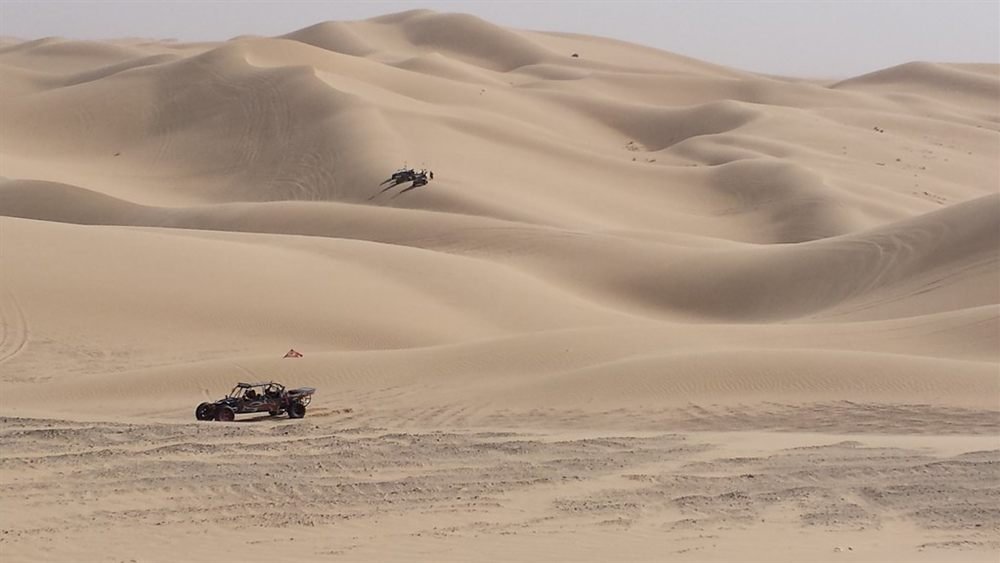
Sand Setup
Tires: Paddle tires on the rear, ribbed or smooth tires on the front. The paddles scoop sand for forward thrust; the ribbed fronts track straight without digging in.
Suspension: Soft and long-travel. Sand absorbs impact, so you don't need stiff springs — but you do need travel to handle dune faces and whoops. Bump up the rebound damping slightly to keep the suspension from packing down.
Accessories: Whip flags are mandatory in the dunes for visibility over crests. A pre-filter or outerwear over the air intake keeps fine sand out of the engine. GPS is critical — sand dunes look the same in every direction.
Tire Pressure: Drop to 8–12 PSI. The wider footprint floats on soft sand instead of digging in.
Mud Setup
Tires: Deep-lug mud tires with wide void spacing. The lugs dig in, the voids channel mud out. Bigger is generally better — a 32-inch mud tire gives you more ground clearance in ruts.
Suspension: Stock height or a 2–3 inch lift. You need clearance to keep the frame above the mud line, but you don't need long travel. Stiff springs help prevent the machine from settling into deep ruts.
Accessories: A radiator relocate kit is almost essential — the stock radiator position behind the front bumper plugs with mud and causes overheating. A winch is non-negotiable. Snorkel kits keep water out of the intake on deep crossings.
Tire Pressure: 6–10 PSI. Low pressure maximizes the tire's footprint and lets the lugs spread for more grab.
Rock Setup
Tires: Soft-compound rock tires with siped tread blocks. The soft rubber grips smooth stone surfaces like a climbing shoe. Beadlock wheels are strongly recommended — they mechanically lock the tire bead so you can run 4–6 PSI without the tire rolling off the rim.
Suspension: Slow, controlled, and articulate. You want the suspension to drape over obstacles, keeping all four tires on the ground. Softer springs and slower compression damping help. Sway bar disconnects let the suspension flex independently.
Accessories: A full skid plate set protects the underside from sharp ledges. Nerf bars and rock sliders protect the sides. A spotter and a good set of radios are more useful than any bolt-on part in technical terrain.
Tire Pressure: 4–8 PSI. This is where beadlocks earn their keep. Low pressure lets the tire conform to the rock surface for maximum contact.
Can One Machine Do Everything?
Sort of. A set of good all-terrain tires, a moderate lift, and a winch will get you through most recreational terrain. But if you're pushing into serious conditions — deep mud bogs, technical rock trails, or high-speed dune runs — a dedicated setup makes a dramatic difference.